
Feeling Full, Bloated, or Nauseated? It May Not Be “Just Aging”
Most of us do not think much about digestion until it stops cooperating. Then suddenly, your stomach has opinions.
Bloating. Nausea. Constipation. Reflux. Feeling full after just a few bites. Food that seems to sit in the stomach way too long.
While some changes in digestion can occur over time, many digestive issues in older adults are not simply a normal part of aging. In some cases, they may be related to a condition called gastroparesis in older adults, where the stomach empties more slowly than it should.
When the Stomach Slows Down
The digestive system relies on coordinated muscle contractions to move food through the stomach and intestines. This process is called motility.
Changes in gut motility and aging can sometimes contribute to digestive symptoms, but aging itself is rarely the entire explanation.
Common contributors to slow stomach emptying include:
Diabetes
Parkinson’s disease and other neurologic conditions
Lower activity levels
Dehydration
Chronic constipation
Certain medications
Gastroparesis means the stomach empties too slowly. There is no blockage, but food does not move into the small intestine the way it should.
What Gastroparesis Can Feel Like
Many people are surprised by how varied gastroparesis symptoms can be.
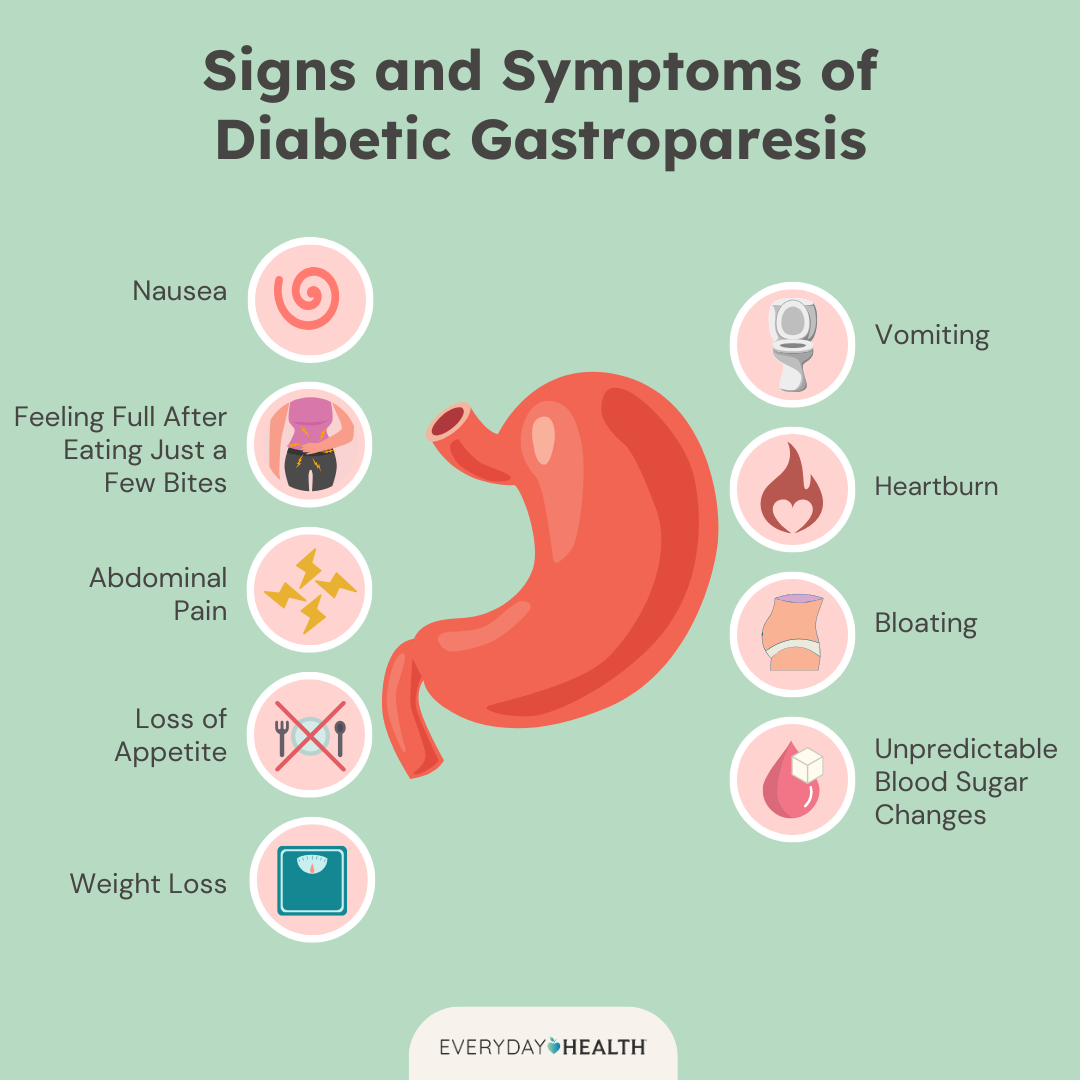
Common symptoms include:
Feeling full quickly
Nausea
Vomiting
Bloating
Reflux or heartburn
Poor appetite
Weight loss
Blood sugar swings
For some people, the first sign is simply early fullness after eating. Others experience persistent nausea and bloating in seniors that seems to come and go without an obvious cause.
And no, this should not be brushed off as “just getting older.”
That phrase has retired.
We are no longer giving it a job.
Why Medications Matter
This is where the medication list deserves a spotlight.
Several medications that slow digestion can contribute to symptoms or make existing problems worse. This may include certain pain medications, some bladder medications, some nausea medications, and medications used for diabetes or weight loss.
That does not mean these medications are bad.
It means someone needs to ask the right question:
Could this symptom be connected to the medication list?
Too often, older adults are treated symptom by symptom without anyone stepping back to look at the whole picture. This is especially common when multiple medications are involved, a problem known as polypharmacy in older adults.
Diabetes and Gastroparesis: An Important Connection
One of the most common causes of diabetes and gastroparesis is long-term nerve damage that affects how the stomach muscles function.
When food stays in the stomach longer than expected, blood sugar management can become more difficult because digestion becomes unpredictable.
This is one reason medication review, nutrition, hydration, and blood sugar management often need to be considered together rather than separately.
Treatment Is Not One-Size-Fits-All
Treatment usually starts with practical changes:
Smaller meals
Softer or easier-to-digest foods
Lower-fat meals
Better hydration
Blood sugar control when diabetes is involved
Reviewing medications that may slow digestion
Some people may need medication to help the stomach empty or control nausea.
Newer treatment guidelines continue to support medications such as metoclopramide and erythromycin in appropriate situations, but both require careful monitoring and individualized decision-making.
This is not a DIY situation.
It is a “let’s look at the whole person” situation.
This Week’s Practical Tip
If you or someone you care for has ongoing nausea, bloating, poor appetite, vomiting, constipation, or early fullness, write down:
When symptoms happen
What foods make them worse
Any weight loss
Blood sugar changes, if diabetic
Any medication changes before symptoms started
Bring that list to the appointment.
The goal is not to diagnose yourself.
The goal is to help your healthcare team connect the dots faster.
Need Help Connecting the Dots?
Many digestive symptoms involve more than one issue at the same time.
Medications. Diabetes. Nutrition. Hydration. Multiple providers.
That is exactly where Ask the Advocate can help.
In one focused session, we can review the medication list, organize symptoms, identify questions for the provider, and help you move forward with more clarity, confidence, and control.
✨ Stay confident. Stay informed. Stay Taylormade.
Cheers!
Dr. T