
Don’t Be the 1 in 4 That Fall Every Year
A fall isn’t just a stumble — for many older adults, it can trigger a cascade of medical and functional decline. The good news? Most falls are preventable with the right awareness and small, consistent actions.
The Stats You Should Know
📊 Here’s why fall prevention matters:
More than 14 million adults age 65+ report a fall every year — about 1 in 4
Falls send over 3 million older adults to emergency departments annually
Falls are the leading cause of fatal and non-fatal injuries in adults 65+
In 2023, the death rate from unintentional falls was 69.9 per 100,000
According to the Centers for Disease Control and Prevention, these numbers continue to rise as people live longer — often with multiple medical conditions.
Nobody wants to be one of these statistics… and yet fall risk is usually checked once a year (if that).
Quick Self-Screening Checklist
A simple at-home check can flag early risk:
Have you fallen in the last year?
Do you feel unsteady when standing or walking?
Can you stand up from a chair without using your arms?
Do you need to pause after standing to avoid dizziness?
Have you noticed slower walking or shuffling?
Are you on medications that cause dizziness, drowsiness, or blood pressure drops?
Is your home free of tripping hazards (rugs, cords, clutter, dim lighting)?
👉 If a few of these raise concern, it’s time to take steps to reduce risk.
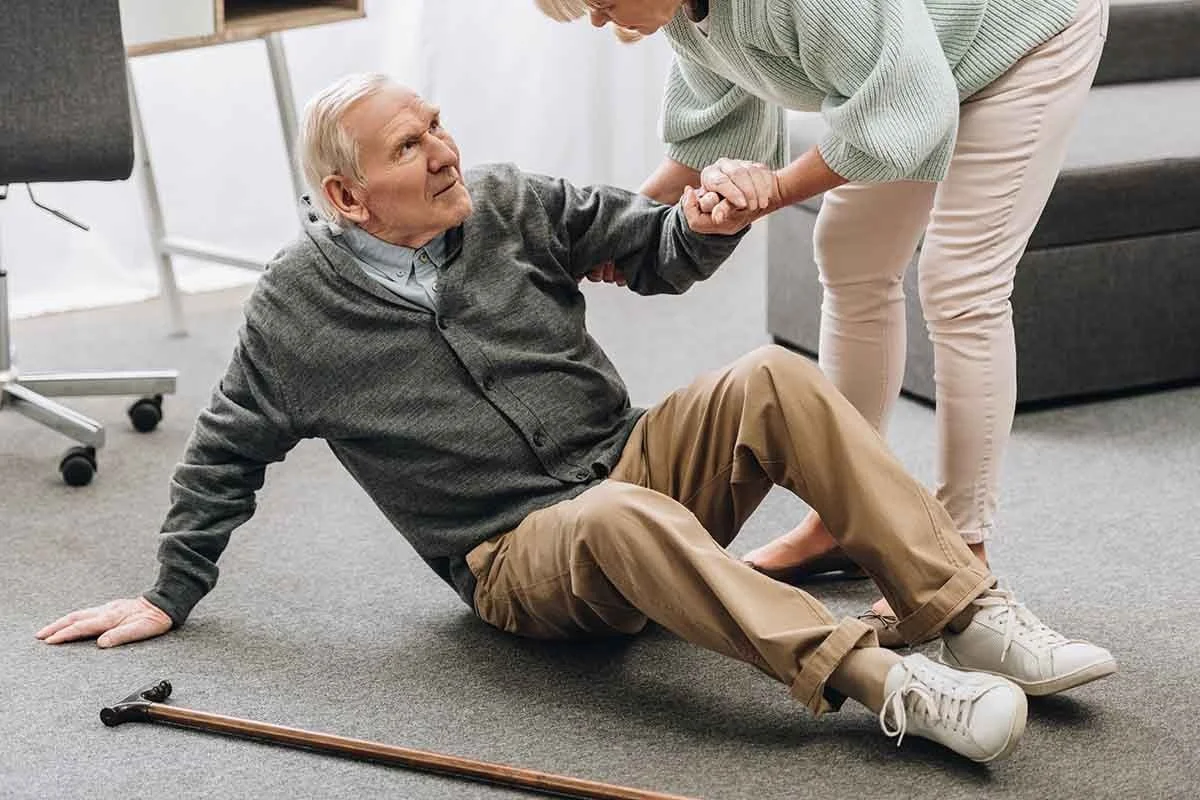
Falls aren't an inevitable part of aging — they’re a risk we can reduce. With small, consistent changes, older adults can protect their independence and stay safer at home.
What You Can Do to Reduce Fall Risk
✅ Strength & Balance Work
Leg, core, and balance exercises are among the most effective fall-prevention tools.
👀 Vision & Hearing Check-Ups
Small fixes — new glasses or hearing aids — remove major hidden hazards.
💊 Medication Review
Many medications (sleep aids, pain meds, blood pressure meds) increase fall risk. A review can uncover the problem.
🏠 Home Safety Audit
Remove loose rugs, improve lighting, add grab bars, and declutter walkways. (HELP! I’ve Fallen and I Can’t Get Up!)
👟 Wear Safe Footwear
Choose supportive, non-slip shoes with a proper fit. House shoes count too — slippery slippers are repeat offenders.
🚶 Move Safely
Stand up slowly. Pause before walking. Avoid multitasking while moving (yes, even carrying laundry).
🦯 Use Mobility Aids Consistently
If you’ve been advised to use a cane or walker, use it. Mobility aids aren’t weakness — they’re independence insurance.
💧 Stay Active & Hydrated
Inactivity and dehydration both worsen balance and dizziness.
🩺 Manage Chronic Conditions
Better control of blood pressure, diabetes, heart disease, pain, and neuropathy = better stability.
Falls aren’t an inevitable part of aging — they’re a modifiable risk. With small, consistent changes, older adults can protect independence and stay safer at home.
If you or someone you love is facing fall concerns, medication issues, or mobility changes, I can help create a personalized fall-prevention plan.
✨ Stay confident. Stay informed. Stay Taylormade.